ALERT: How scammers manipulate caller ID to trick you
What’s happening
New tools for cellphones designed to protect you from scammers are here. Which is something to celebrate.
Why it’s great
If a caller is not on your contact list, these tools send the call directly to voice mail so you don’t have to answer. As of late 2025, iPhone users can even set up a virtual assistant to interview unfamiliar callers before they are allowed to leave a message.
My warning
As helpful as these scam-detection options are, it’s important to understand that these tools do not stop scammers from calling you in every scenario. They only flag calls from numbers that are not on your phone’s contact list.
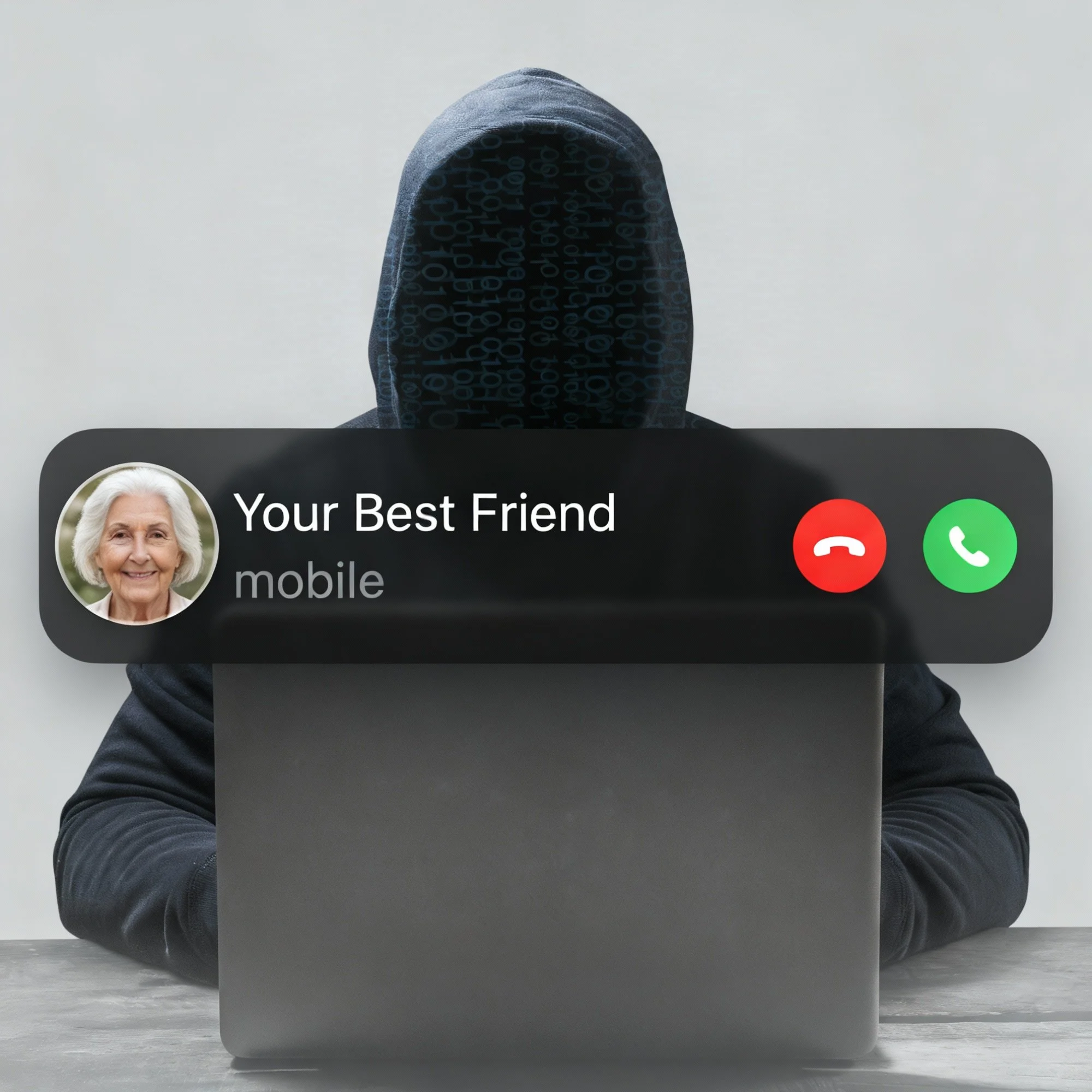
So if a scammer knows (or can figure out) the phone number of a friend or family member you’ve added to your contact list, they can “fake-call” you as that person simply by typing the number into their computer.
When the scam call appears on your cellphone screen, it will look exactly like a call from your loved one. So if you’ve given them a nickname in your contact list, that name could show up. If your phone is set up to display avatars, you might even see their picture. But it won’t be them. It will be a scammer.
People who work in cybersecurity call this practice “spoofing.” But I’ll refer to it here as “caller ID impersonation.”
Caller ID impersonation is currently, and will likely continue to be, one of the easiest (and scariest) ways for scammers to get you. The technology is cheap, it works on cellphones and landlines, and it allows for instant access to a scammer’s most valuable commodity — your trust.
If you are using one of the new scam-detection tools and are under the impression that you are now safe, you may be even more vulnerable.
Scammers can set up fake caller ID to impersonate anyone
If you’re not using a scam-detection tool, all your incoming calls get through and it’s up to you to decide when to pick up. Which isn’t as easy as it sounds.
Since scammers can control the names and numbers that appear on your cellphone or landline call display, they can impersonate anyone: your bank’s fraud department, technical support services like Geek Squad or Microsoft, or your local police department, sheriff’s office or jail. This is why answering unexpected calls (including calls that seem legitimate) can be so dangerous.
Even if you are using a scam-detection tool on your cellphone, it’s important to stay vigilant. Remember: calls from scammers who use caller ID impersonation can still get through — as long as they use a number that’s in your contact list.
If a scammer can figure out your spouse’s number, they can call as “your spouse.”
If you’ve added businesses (such as your bank) to your cellphone contact list, a call impersonating your bank may be even more likely to trick you. Because, in your mind, all scam calls are blocked (and, in most cases, it’s true). Which makes the incoming call from "your bank” feel 100% authentic — even when it isn’t.
Tech Moment
Just to be absolutely clear, scammers who impersonate via caller ID are not really calling from the phone number that appears on your call display. If you were to call this number back, the scammer wouldn’t answer. It would be the legitimate business they were pretending to be.
These scammers are just entering a name and digits into a computer system that interacts with your call display. It’s criminally easy. And, because there are a handful of legal use cases for this caller ID controlling system, bad actors can take advantage of it. Even in countries where spoofing is illegal, there are ways to get around the rules.
The perfect fake: caller ID impersonation + AI voice cloning
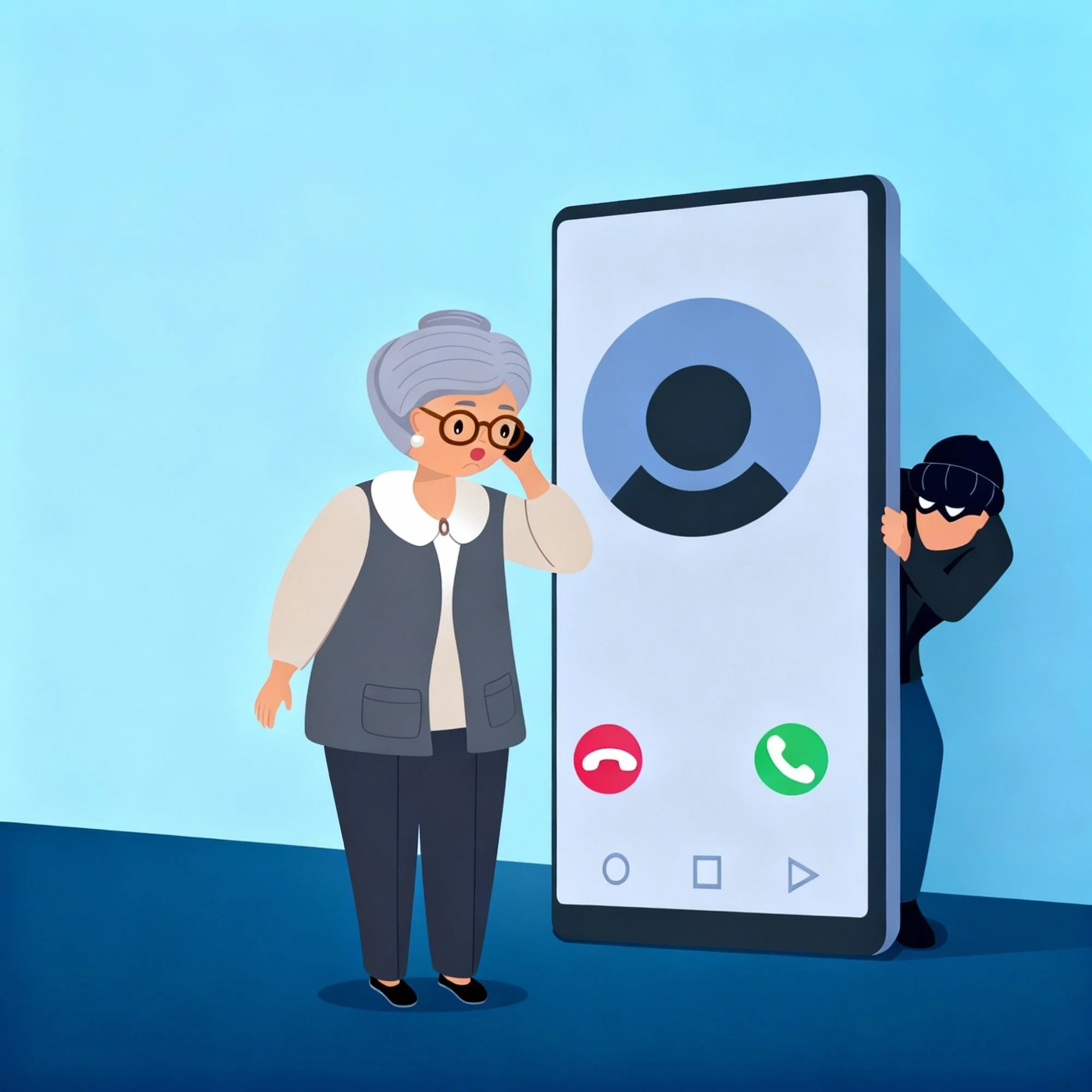
You’ve probably heard of the “grandparent scam.” This standard scam becomes much more sophisticated if criminals are using AI tools.
Imagine this scenario: Let’s say a scammer does a bit of research and is able to find your daughter’s phone number. Then the scammer goes to your daughter’s Facebook or Instagram account and uses AI to clone her voice from a few seconds of video.
Now the scammer has everything he needs to impersonate your daughter in a call.
Your daughter’s number will appear on your call display (even though it’s not really her calling) and the AI-cloned voice will sound exactly like her.
When your “daughter” explains the terrifying situation she’s in and asks for money, of course you’ll panic and send cash. It’s her number and her voice. No one would think to question the authenticity of the caller. Your daughter said she was in a car accident, so it must be true.
In another version of this scam, the caller says he’s kidnapped your daughter and demands a ransom. The scammer makes it look like he’s calling from your daughter’s number so you think he’s holding her physical cellphone. You hear a woman screaming and, even without AI, even if you’re normally a sceptical person, even if the screaming voice sounds absolutely nothing like her, your protective animal instincts take over and you believe everything the caller tells you.
Now, as additional “proof,” the scammer can use your daughter’s AI-cloned voice to convince you that she is there with him (when, in reality, your daughter is at her local Starbucks and the “kidnapper” is probably in a different country).
If you ever get a call like this, it’s only natural to panic. In reality, the chance of someone you know being kidnapped by a stranger and held for ransom in a developed country like the US is so close to zero, from a statistical perspective it’s zero percent. If your loved one is out of the country and shared their travel plans on social media, fake kidnappers can use this info to their advantage. As hard as it may be, try to keep your suspicion level turned all the way up.
If that wasn’t disturbing enough, let’s add visuals
In December 2025, the FBI warned that some scammers are going one step further and texting AI-generated photos and videos of “kidnapped” loved ones, threatening violence, and demanding a ransom. The fake kidnappers often send photos that disappear after viewing so you don’t have time to notice slight inaccuracies since as missing scars or tattoos. Fake kidnappers who send AI photos often skip the phone call and initiate contact via text.
I don’t know about you, but I’m getting stressed out just thinking about it.
What to Do
If you ever get a call like this, say, “hold on, I can’t hear you, I have to turn my hearing aid up,” or “my cookies are burning.”
Take a moment to pause and tell yourself that this is probably a scam. Then send your daughter a quick text — something subtle like “ARE YOU CALLING ME RIGHT NOW?????? IS EVERYTHING OKAY????? I’M WORRIED — PLEASE RESPOND!!!!!”
(Remember: a scammer using fake caller ID to impersonate your daughter can’t see texts you send to her number. And they can’t answer calls either.)
While you’re waiting for a response, ask the caller questions only your daughter could know the answer to (nothing that is publicly available). Some families even set up a verbal “scam-buster” password phrase in advance. As soon as you start asking questions, the scammer will probably hang up.
If you can handle it psychologically, don’t talk to the scammer at all. Simply hang up the phone and call your daughter to make sure she’s okay. I know, this is easier said than done.
What is the chance that you’ll be targeted by a scammer who uses AI to impersonate someone you know? Unless you (or your loved one) are an influencer, are semi-famous, or have a job that involves moving money, it’s probably pretty low — for now.
But it’s important to know what’s possible. Because if enough scam calls are blocked by these new screening tools, criminals might be forced into taking a more personalized approach.
My philosophy: It’s best to know what could happen in the near future, so if you get a suspicious call or text, you’ll be more likely to recognize it for what it is. A scam designed to scare you into giving your hard-earned cash to a criminal.
Until next time,
Love Auntie Scam
